On Earth Day, it’s important to discuss how we can create a better world. Agriculture is responsible for stewarding large areas of land and producing food for us all as sustainably as possible. To help you and your students explore agricultural environmental issues and how the agriculture industry is working to be more sustainable, here are some activities and resources you can use:
Earth Day 2026 - Painting with Soils (EN)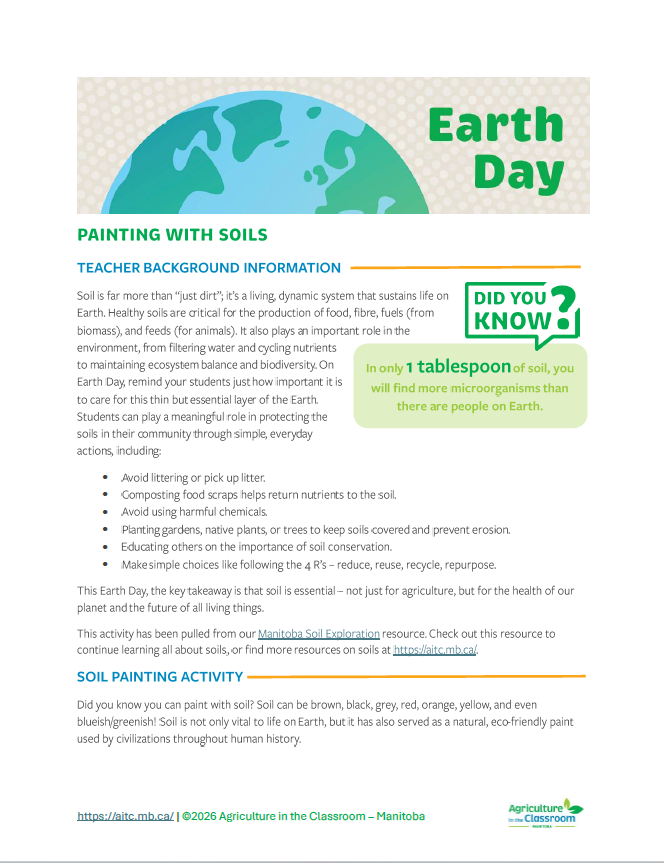
Earth Day - Painting with soils
Grades 1 to 8: Soil is far more than “just dirt”. It’s a living, dynamic system that sustains life on Earth. This Earth Day, the key takeaway is that soil is essential – not just for agriculture, but for the health of our planet and the future of all living things. Spark curiosity, creativity, and a whole lot of fun with our Painting with Soils activity and see this incredible natural resource in a whole new way!
Earth Day - Litterless Lunch Challenge (EN)
Earth Day - Litterless Lunch Challenge
Grades 1 to 8: How can we reduce our reliance on the production and use of plastics, especially all single use plastics? The Litterless Lunch Challenge combines learning about where our food comes from, and how the food we eat and the beverages we drink every day are packaged.
Journey 2050 Online Resource (EN)
Journey 2050
Grades 7 to 12: How will we sustainably feed nearly 10 billion people by the year 2050? Journey 2050 allows schools around the world to experience agriculture like it's never been taught before. As students explore world food sustainability, they are encouraged to think critically about the ripple effect on social, economic and environmental factors locally and globally.
Teachers can run the Journey 2050 program on their own in the classroom. Check out the link above to find curriculum links, step-by-step lesson plans, animated videos, interactive games, agriculture news, answer keys and much more!
Guardians of the Grasslands Resource (EN & FR)
Guardians of the Grasslands Documentary / Documentaire sur les Gardiens des prairies
Grades 5 to 12: Sometimes what you thought was the problem, is really the solution. This is a short documentary, brought to you by a group of dedicated conservationists, ranchers, and Canadian filmmakers, which explores the current state of one of the world’s most endangered ecosystems, the Great Plains grasslands, and the role that cattle play in its survival.
Grades 7 to 12: English and French Teacher Guides contain links to English and French versions of the documentary and resources to facilitate student exploration of biodiversity, soil health, climate change, land management, and more.
Grades 5 to 8: Have students explore the environmental impact of producing protein foods in Canada and reducing food waste with this activity from the Eat Well Kit: Eat Well - Activity 6, Part 3 worksheet (download) / Bien Manger - Activite 6, partie 3 (télécharger)
snapAG Sheets / Fiches d'information snapAG
snapAG is a series of resources that invite students to explore the hot topics affecting the agriculture industry today. Here are a few that are relevant for Earth Day:
Little Green Thumbs Activities / Activités des Petits Pouces Verts
K to Grade 6:
You’re Wearing Plants! / Petits Pouces Verts: Vous portez des plantes!
In this activity, students will discover that many products that we use every day, come from trees or plants.
K to Grade 6:
Make Your Own Newspaper Planting Pots
Making newspaper planting pots is a fun, easy activity that can also save costs in the garden!
K to Grade 6:
Can We Grow Plants Without Soil? / Petits Pouces Verts: Peut-on faire pousser des plantes sans terre?
Students will discover how to grow plants without using soil in a system called hydroponics.
Grades 2 to 6:
Life Without Plants / Petits Pouces Verts: La vie sans plantes
What would our lives be like without plants? In this activity, students are thinking about everyday items made from plants and what life would be like without them!
Grades 3 to 6:
Plants, People & Climate Change
Plants, People & Climate Change take students on the journey from building a foundational understanding of plant and earth science knowledge, to an introduction of Climate Change and an exploration of the personal and global solutions to combat it.